 ENG
 ITA
 FRA
 ESP
 DEU

One application in which vacuum plays a crucial role is the extraction of essential oils, aromas and natural compounds for perfumery, cosmetics and the food industry.
Essential oils consist of volatile, often heat-sensitive aromatic compounds: excessively high temperatures can alter their composition, change their aromatic profile and reduce the quality of the final product. For this reason, more and more natural aroma extraction and distillation processes are adopting vacuum technologies, which operate at much lower temperatures than traditional methods.
In the natural flavours and plant extracts sector, the quality of the final product largely depends on how gently the separation process is carried out. Vacuum distillation reduces the pressure inside the system, lowering the temperature needed to evaporate volatile compounds. This allows aromas and essential oils to be extracted under gentler conditions than atmospheric distillation, preserving their chemical and organoleptic properties.
The vacuum pump therefore performs an essential function: it creates and maintains the vacuum level required for a stable, controlled and repeatable process.
The physical principle is the same as for any liquid-to-vapour phase change: the boiling point of a substance depends on the pressure to which it is subjected. By reducing the pressure inside the column or reactor, the boiling point of aromatic compounds decreases significantly, allowing them to be separated from the plant matrix without reaching the temperatures required by atmospheric distillation.
This is particularly relevant for essential oils, whose molecules (terpenes, esters and aromatic aldehydes) can degrade, oxidise or polymerise when exposed to prolonged heat. Working under vacuum therefore means not only lowering the process temperature but also reducing the exposure to heat needed to complete extraction.
The vacuum level required for this process is generated and maintained by a dedicated vacuum pump. In the Italvacuum range, the Saurus939 piston vacuum pump —available in single-stage and two-stage versions—is also used for vacuum distillation of plant-based fragrances and aromas, thanks to its high tolerance of dust, condensates and by-products generated during evaporation.
For applications involving flammable solvents or organic dust, an ATEX Zone 0 version is also available. Combining the pump with a Roots blower increases pumping speed and further lowers the ultimate pressure when required by the process.
Before extraction, plant raw materials are often dried to stabilise their moisture content. Vacuum drying technologies offer the same advantage at this stage as vacuum distillation—lower temperatures for an equivalent result—protecting heat-sensitive compounds from the pretreatment stage onward.
Why is vacuum used in essential oil distillation?
Because it reduces process pressure and therefore the temperature required to evaporate volatile compounds. This protects heat-sensitive aromatic molecules, which could degrade or lose part of their organoleptic profile at higher temperatures.
What is the difference between vacuum and atmospheric distillation for essential oils?
Atmospheric distillation operates at ambient pressure and requires higher temperatures to evaporate aromatic compounds. Vacuum distillation lowers the pressure and therefore the process temperature, reducing the risk of thermal degradation and improving final product quality.
What type of vacuum pump is needed for essential oil distillation?
A pump able to tolerate dust, condensates and by-products typical of evaporation processes, such as the Saurus939 piston vacuum pump, also available in a two-stage version and an ATEX version for processes involving flammable solvents.
Would you like to assess the most suitable technology for your extraction process? Discover Saurus939 or request more information from our technical team.
READ ALSO:
How long does a vacuum pump last? The Saurus939 case
Essential oils consist of volatile, often heat-sensitive aromatic compounds: excessively high temperatures can alter their composition, change their aromatic profile and reduce the quality of the final product. For this reason, more and more natural aroma extraction and distillation processes are adopting vacuum technologies, which operate at much lower temperatures than traditional methods.
In the natural flavours and plant extracts sector, the quality of the final product largely depends on how gently the separation process is carried out. Vacuum distillation reduces the pressure inside the system, lowering the temperature needed to evaporate volatile compounds. This allows aromas and essential oils to be extracted under gentler conditions than atmospheric distillation, preserving their chemical and organoleptic properties.
The vacuum pump therefore performs an essential function: it creates and maintains the vacuum level required for a stable, controlled and repeatable process.
How vacuum distillation works
The physical principle is the same as for any liquid-to-vapour phase change: the boiling point of a substance depends on the pressure to which it is subjected. By reducing the pressure inside the column or reactor, the boiling point of aromatic compounds decreases significantly, allowing them to be separated from the plant matrix without reaching the temperatures required by atmospheric distillation.
This is particularly relevant for essential oils, whose molecules (terpenes, esters and aromatic aldehydes) can degrade, oxidise or polymerise when exposed to prolonged heat. Working under vacuum therefore means not only lowering the process temperature but also reducing the exposure to heat needed to complete extraction.
The benefits of vacuum distillation for essential oils
- Protection of heat-sensitive compounds
- Improved final product quality
- Greater process control
- Reduced thermal energy consumption
- Recovery of sensitive compounds
The role of the vacuum pump: technology and applications
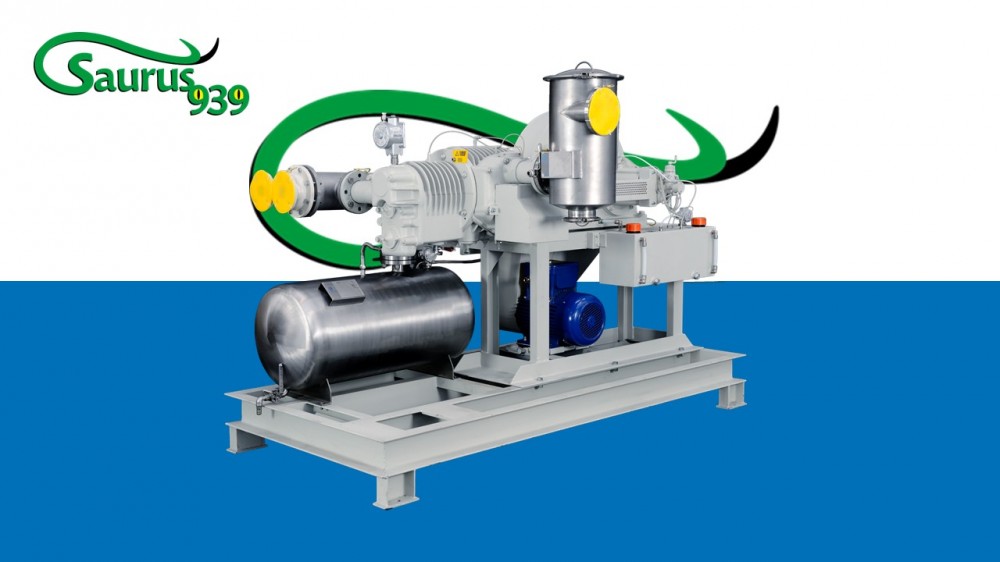
The vacuum level required for this process is generated and maintained by a dedicated vacuum pump. In the Italvacuum range, the Saurus939 piston vacuum pump —available in single-stage and two-stage versions—is also used for vacuum distillation of plant-based fragrances and aromas, thanks to its high tolerance of dust, condensates and by-products generated during evaporation.
For applications involving flammable solvents or organic dust, an ATEX Zone 0 version is also available. Combining the pump with a Roots blower increases pumping speed and further lowers the ultimate pressure when required by the process.
Before extraction, plant raw materials are often dried to stabilise their moisture content. Vacuum drying technologies offer the same advantage at this stage as vacuum distillation—lower temperatures for an equivalent result—protecting heat-sensitive compounds from the pretreatment stage onward.
Italvacuum Saurus939 piston vacuum pump, also suitable for vacuum distillation processes of essences and aromas.
Frequently asked questions
Why is vacuum used in essential oil distillation?
Because it reduces process pressure and therefore the temperature required to evaporate volatile compounds. This protects heat-sensitive aromatic molecules, which could degrade or lose part of their organoleptic profile at higher temperatures.
What is the difference between vacuum and atmospheric distillation for essential oils?
Atmospheric distillation operates at ambient pressure and requires higher temperatures to evaporate aromatic compounds. Vacuum distillation lowers the pressure and therefore the process temperature, reducing the risk of thermal degradation and improving final product quality.
What type of vacuum pump is needed for essential oil distillation?
A pump able to tolerate dust, condensates and by-products typical of evaporation processes, such as the Saurus939 piston vacuum pump, also available in a two-stage version and an ATEX version for processes involving flammable solvents.
Would you like to assess the most suitable technology for your extraction process? Discover Saurus939 or request more information from our technical team.
READ ALSO:
How long does a vacuum pump last? The Saurus939 case