 ENG
 ITA
 FRA
 ESP
 DEU

In industry, performance, energy efficiency and productivity are frequently discussed. Less attention is paid to another essential factor when selecting a vacuum pump: its ability to provide reliability and operational continuity over time.
A tangible example is a historic Italvacuum piston vacuum pump, installed in 1965 at a company specializing in essential oil production and operated until 2024. For almost sixty years, the pump supported vacuum distillation during periodic production campaigns held every two or three months and lasting several weeks. It was replaced only in 2024, after an exceptionally long industrial service life.
When the Saurus939 vacuum pump first went into operation, production requirements, control technologies and industrial standards were very different from those of today. Yet over the decades it continued to perform its task consistently, maintaining the vacuum conditions required for essential oil distillation.
Its longevity is more than a historical curiosity: it demonstrates how robust engineering, suitable materials and proper maintenance can affect the overall value of industrial equipment.
A pump that remains operational for decades can:
For the Saurus939, these benefits translated into almost sixty years of service in the same production process.
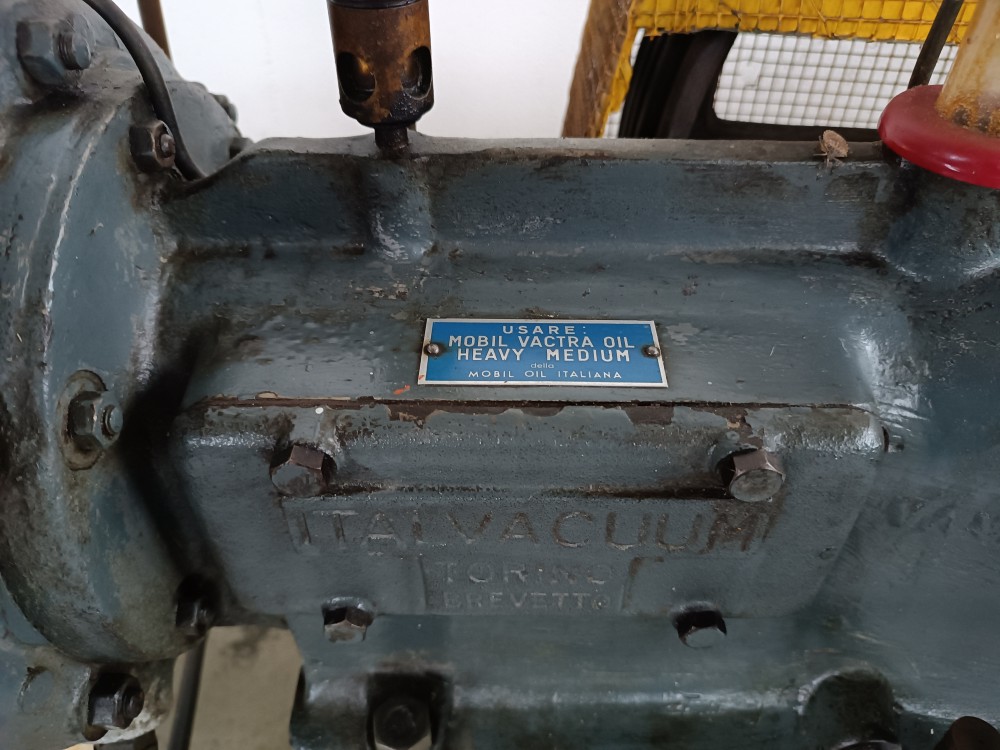
Detail of the Italvacuum Saurus939 vacuum pump, installed in 1965 and in service until 2024.
There is no precise figure: service life depends on design technology, operating conditions and maintenance quality. In general, a well-designed, properly maintained vacuum pump can remain in service for many years, often more than a decade. The Saurus939 installed in 1965—operational for almost sixty years until 2024—is an exceptional case showing how far this limit can be extended when engineering, materials and maintenance work together.
The service life of the pump installed in 1965 cannot be attributed to a single factor, but to a combination of design, construction, operating conditions and maintenance.
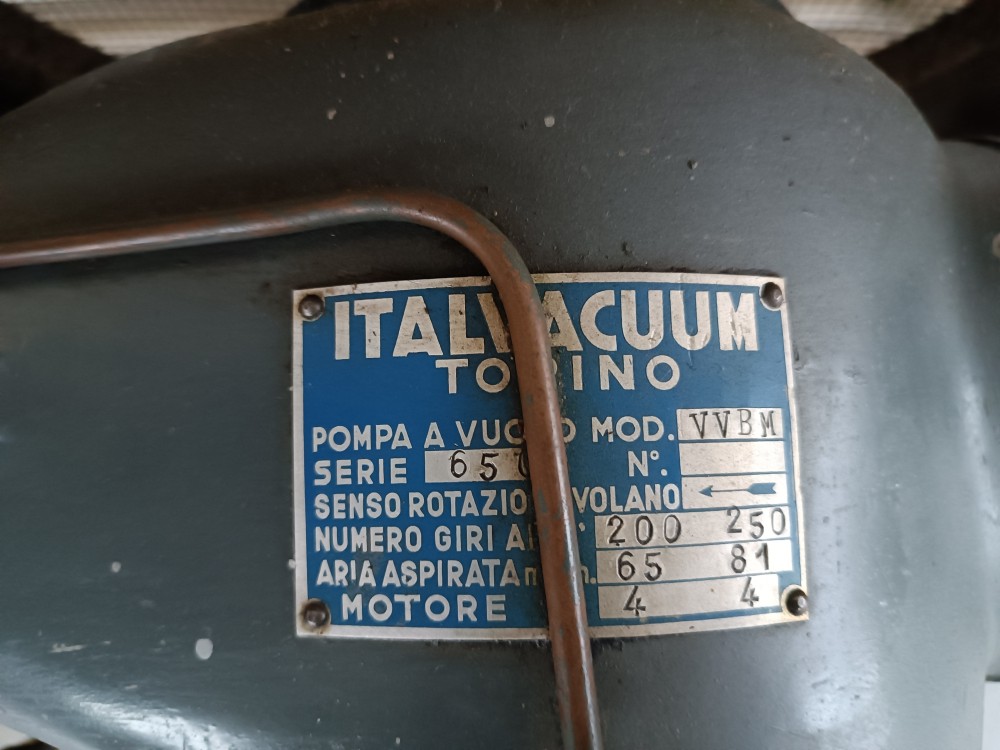
 Original identification plate of the Italvacuum vacuum pump that remained in service for almost 60 years.
When comparing vacuum pumps, the initial price is only one factor. The actual cost of a machine over its life cycle also includes:
A pump that appears economical at purchase may become expensive if it needs frequent maintenance, causes unplanned downtime or must be replaced after only a few years. Conversely, a reliable machine designed for longevity can offer a much better return on investment over time.
For the Saurus939 pump installed in 1965, its long operating life reduced the need for replacements and limited downtime, clearly demonstrating the value of investing in quality.
The Saurus939 piston pump remains one of Italvacuum's flagship products. Today's technical features build on decades of Italvacuum engineering and industrial application experience, retaining the principles that allowed the 1965 machine to operate for almost sixty years:
These qualities are now complemented by design solutions and technologies developed to meet the needs of modern industry, with particular attention to efficiency, consumption and total equipment cost.
The objective remains to offer an industrial vacuum pump capable not only of achieving the required performance, but of sustaining it over time.
A pump that remained operational from 1965 to 2024 is an exceptional case and a tangible message.
Reliability is not measured only during acceptance testing or the first years of operation. It is proven over time, through thousands of operating hours, repeated production campaigns and scheduled maintenance.
The story of this Saurus939 confirms that a well-designed, correctly operated and properly maintained machine can become a long-term industrial investment.
After almost sixty years of service, the pump completed its working life. The engineering philosophy behind its longevity lives on in the new generation of Saurus939 pumps.
How long does an industrial vacuum pump typically last?
It depends on technology, operating conditions and maintenance: there is no universal figure, but a well-built and maintained pump can operate for many years. The Italvacuum Saurus939, in service from 1965 to 2024, is a concrete example of how robust engineering and scheduled maintenance can extend that limit.
Should a vacuum pump be selected solely on purchase price?
No. The initial price is only one part of total cost. Energy consumption, routine and extraordinary maintenance, spare-part availability, downtime frequency and component lifespan must also be considered. A cheaper pump that breaks down frequently may cost more over time than a more robust machine, as demonstrated by the Saurus939 that remained in service for almost 60 years.
What determines the lifespan of a vacuum pump?
Four main factors: robust construction and suitable materials, straightforward design (fewer components prone to failure), regular scheduled maintenance and consistent performance even after years of intensive use.
Discover Italvacuum Saurus939
Italvacuum is an Italian company founded in 1939 in Borgaro Torinese, specializing in the design and manufacture of vacuum pumps and industrial dryers for the pharmaceutical, chemical and food industries. Its historic products include the Saurus939 piston vacuum pump featured in this article.
Explore all the features of Saurus939 and contact the Italvacuum team to identify the configuration best suited to your production process.
DISCOVER SAURUS939
A tangible example is a historic Italvacuum piston vacuum pump, installed in 1965 at a company specializing in essential oil production and operated until 2024. For almost sixty years, the pump supported vacuum distillation during periodic production campaigns held every two or three months and lasting several weeks. It was replaced only in 2024, after an exceptionally long industrial service life.
A history of reliability beginning in 1965
When the Saurus939 vacuum pump first went into operation, production requirements, control technologies and industrial standards were very different from those of today. Yet over the decades it continued to perform its task consistently, maintaining the vacuum conditions required for essential oil distillation.
Its longevity is more than a historical curiosity: it demonstrates how robust engineering, suitable materials and proper maintenance can affect the overall value of industrial equipment.
A pump that remains operational for decades can:
- reduce replacement costs
- lower the risk of production downtime
- simplify maintenance planning
- ensure process continuity
- spread the initial investment over a much longer period.
For the Saurus939, these benefits translated into almost sixty years of service in the same production process.
Detail of the Italvacuum Saurus939 vacuum pump, installed in 1965 and in service until 2024.
What is the average lifespan of an industrial vacuum pump?
There is no precise figure: service life depends on design technology, operating conditions and maintenance quality. In general, a well-designed, properly maintained vacuum pump can remain in service for many years, often more than a decade. The Saurus939 installed in 1965—operational for almost sixty years until 2024—is an exceptional case showing how far this limit can be extended when engineering, materials and maintenance work together.
Why this Saurus939 lasted so long
The service life of the pump installed in 1965 cannot be attributed to a single factor, but to a combination of design, construction, operating conditions and maintenance.
- Robust construction
- Straightforward design
- Scheduled maintenance
- Consistent performance
Original identification plate of the Italvacuum vacuum pump that remained in service for almost 60 years.
Purchase price is not the true cost
When comparing vacuum pumps, the initial price is only one factor. The actual cost of a machine over its life cycle also includes:
- energy consumption
- routine and extraordinary maintenance
- availability and cost of spare parts
- component service life
- frequency of shutdowns
- production losses
- time required for maintenance work
- potential early replacement of the machine.
A pump that appears economical at purchase may become expensive if it needs frequent maintenance, causes unplanned downtime or must be replaced after only a few years. Conversely, a reliable machine designed for longevity can offer a much better return on investment over time.
For the Saurus939 pump installed in 1965, its long operating life reduced the need for replacements and limited downtime, clearly demonstrating the value of investing in quality.
Vacuum systems: how to reduce operating costs with life cycle cost analysis
Saurus939: an engineering legacy that continues
The Saurus939 piston pump remains one of Italvacuum's flagship products. Today's technical features build on decades of Italvacuum engineering and industrial application experience, retaining the principles that allowed the 1965 machine to operate for almost sixty years:
- robustness
- reliability
- ease of maintenance
- operational continuity
- long service life.
These qualities are now complemented by design solutions and technologies developed to meet the needs of modern industry, with particular attention to efficiency, consumption and total equipment cost.
The objective remains to offer an industrial vacuum pump capable not only of achieving the required performance, but of sustaining it over time.
Almost 60 years of service: more than a case study
A pump that remained operational from 1965 to 2024 is an exceptional case and a tangible message.
Reliability is not measured only during acceptance testing or the first years of operation. It is proven over time, through thousands of operating hours, repeated production campaigns and scheduled maintenance.
The story of this Saurus939 confirms that a well-designed, correctly operated and properly maintained machine can become a long-term industrial investment.
After almost sixty years of service, the pump completed its working life. The engineering philosophy behind its longevity lives on in the new generation of Saurus939 pumps.
Frequently asked questions
How long does an industrial vacuum pump typically last?
It depends on technology, operating conditions and maintenance: there is no universal figure, but a well-built and maintained pump can operate for many years. The Italvacuum Saurus939, in service from 1965 to 2024, is a concrete example of how robust engineering and scheduled maintenance can extend that limit.
Should a vacuum pump be selected solely on purchase price?
No. The initial price is only one part of total cost. Energy consumption, routine and extraordinary maintenance, spare-part availability, downtime frequency and component lifespan must also be considered. A cheaper pump that breaks down frequently may cost more over time than a more robust machine, as demonstrated by the Saurus939 that remained in service for almost 60 years.
What determines the lifespan of a vacuum pump?
Four main factors: robust construction and suitable materials, straightforward design (fewer components prone to failure), regular scheduled maintenance and consistent performance even after years of intensive use.
Discover Italvacuum Saurus939
Italvacuum is an Italian company founded in 1939 in Borgaro Torinese, specializing in the design and manufacture of vacuum pumps and industrial dryers for the pharmaceutical, chemical and food industries. Its historic products include the Saurus939 piston vacuum pump featured in this article.
Explore all the features of Saurus939 and contact the Italvacuum team to identify the configuration best suited to your production process.
DISCOVER SAURUS939