 ENG
ENG ITA
ITA FRA
FRA ESP
ESP DEU
DEU
In the industrial sector, the selection of vacuum systems is often driven by the initial purchase cost. However, in a context characterized by rising energy prices and increasing attention to sustainability, this approach is becoming increasingly limiting.
To properly evaluate an investment, it is necessary to consider the total cost over the system’s entire lifecycle. This is where Life Cycle Cost Analysis (LCCA) becomes a fundamental tool for identifying the most efficient and cost-effective solution in the long term.
What is Life Cycle Cost Analysis applied to vacuum pumps
Life Cycle Cost Analysis is a method that allows the evaluation of all costs associated with a vacuum pump throughout its entire lifecycle.
Unlike traditional evaluation methods, LCCA considers:
- purchase cost
- energy costs
- operating costs (utilities)
- environmental costs
Main operating costs of vacuum systems
Energy costs of vacuum pumps
Energy costs are one of the most significant components in system operation.
Electric consumption varies depending on the technology used and operating conditions. Less efficient systems can significantly increase long-term costs.
An energy-efficient vacuum pump allows you to:
- reduce consumption
- improve operational continuity
- contain long-term costs
Utilities: the most relevant hidden costs
Utilities include all costs related to system operation and management, such as:
- routine and extraordinary maintenance
- oil consumption
- water usage
- technical gases
- spare parts and wear components
Systems requiring water or other service fluids can generate very high and difficult-to-predict long-term costs.
Environmental costs and sustainability
Environmental costs include all activities required to manage environmental impact:
- disposal of waste oils
- water treatment
- emission management
- regulatory compliance adjustments
Comparison of vacuum technologies: why costs change over time
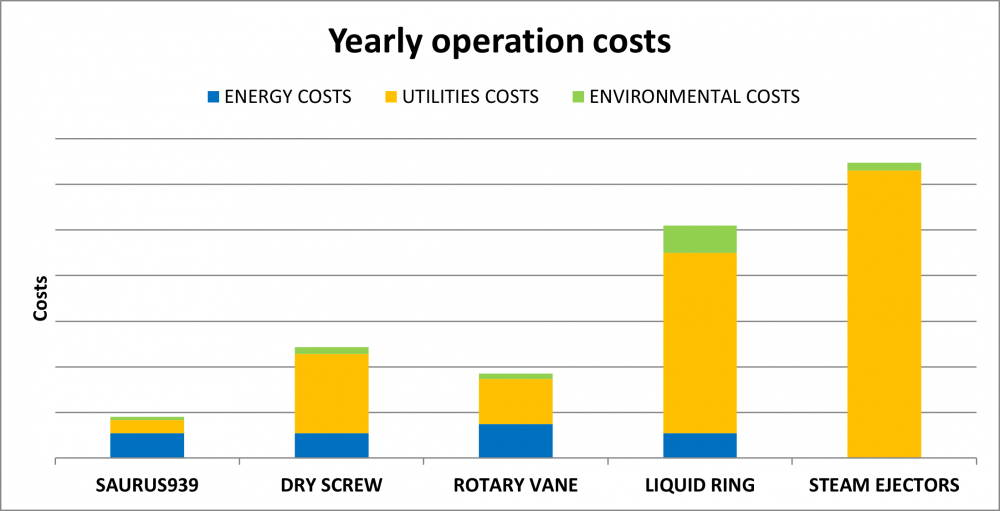
Comparative analysis of different technologies highlights a key aspect: operating costs can vary significantly depending on the chosen solution.
In particular:
- some technologies have higher energy consumption
- others require continuous use of utilities such as water or steam
- others involve more complex environmental costs
An efficiency-oriented approach
In this scenario, some technologies stand out due to a design approach focused on lifecycle cost optimization.
Italvacuum vacuum systems are developed and manufactured with the goal of:
- reducing energy consumption
- minimizing or eliminating utility usage
- limiting maintenance interventions
- simplifying environmental management
Cost over time and return on investment
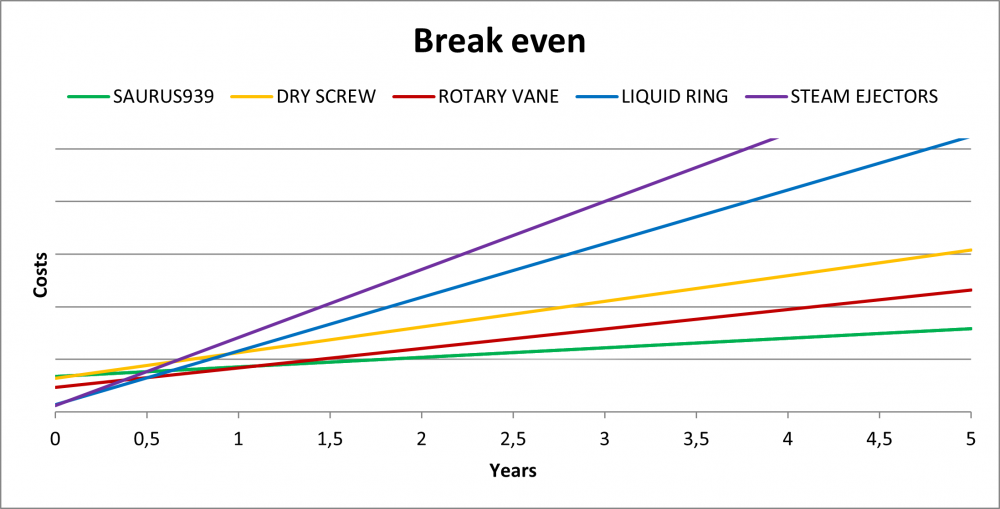
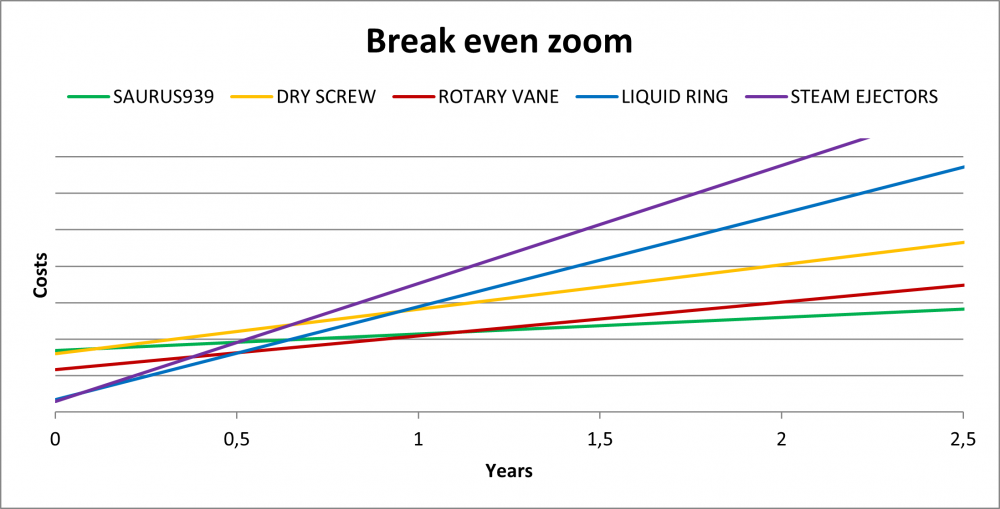
When analyzing lifecycle cost, it becomes clear that differences between technologies become more evident over time.
Systems with higher operating costs tend to increase total cost rapidly, while more efficient solutions allow faster achievement of economic balance and investment optimization.
Conclusions
The selection of a vacuum system can no longer be based solely on initial cost.
The adoption of Life Cycle Cost Analysis allows companies to:
- comprehensively evaluate different technologies
- reduce operating costs
- improve overall system efficiency
In this context, solutions designed to minimize energy use, utilities, and environmental impact represent a strategic choice for companies focused on the long term.
Choosing a solution like the Saurus939 vacuum system by Italvacuum therefore means investing in technology designed to deliver value over time, not just at the moment of purchase.
Are you unsure which vacuum technology best fits your process requirements?
Contact us to identify together the most efficient solution for your specific application.