 ENG
ENG ITA
ITA FRA
FRA ESP
ESP DEU
DEU
The challenges of hydrochloric acid (HCl) in industrial processes
Many companies operating in the chemical, pharmaceutical, and petrochemical sectors face processes involving highly corrosive vapors. Among these, hydrochloric acid (HCl) plays a particularly important role, as it is one of the most widely used and critical compounds in terms of corrosiveness.
Hydrochloric acid is used in a wide range of industrial applications thanks to its high reactivity and chemical versatility. However, its highly corrosive properties make it particularly challenging to handle, especially during process phases in which it is present in gaseous or vaporized form.
Hydrochloric acid is widely used in various industrial processes, including:
- Production of chemical intermediates and pharmaceutical active ingredients
- Metal pickling processes
- Synthesis of organic and inorganic chlorides
- pH adjustment in water treatment processes
- Production of fertilizers and industrial additives
Why HCl puts your plant at risk
Hydrochloric acid extraction is a critical process that presents severe challenges for conventional vacuum systems:
- Accelerated corrosion: HCl attacks the internal components of the pump (screws, rotors, seals), drastically reducing the machine’s service life and increasing maintenance costs.
- Fluid contamination: In liquid ring or lubricated systems, the acid reacts with the service fluids, altering their properties and requiring frequent replacement and costly disposal operations.
- Acid condensate formation: During compression phases, HCl vapors may condense inside the pumping chamber, triggering localized corrosion attacks even during shutdown periods.
- Performance loss: Component wear caused by aggressive agents leads to a rapid decline in ultimate vacuum levels, compromising the quality of the final product.
Solution: Saurus VVD MTBC Vacuum Pump
The Saurus VVD MTBC vacuum pump, equipped with Hastelloy valves, has been specifically designed to operate in highly corrosive environments and to address all the associated challenges.
The Saurus pump system features a hot cylinder in the vacuum zone, preventing condensation phenomena inside the pump. Vapors are instead condensed and recovered exclusively in an atmospheric post-condenser installed downstream of the vacuum pump.
Furthermore, the continuous presence of oil creates a protective barrier on the internal surfaces, shielding components from direct contact with aggressive substances and ensuring a longer service life.
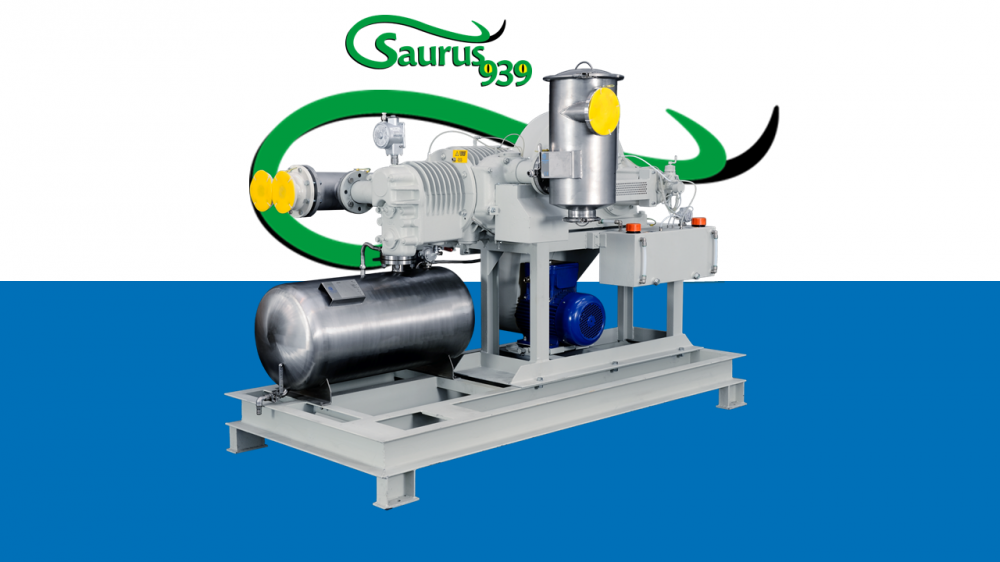
The competitive advantages of the Saurus939 Vacuum Pump
- High Corrosion Resistance Thanks to the Materials Used
The use of highly corrosion-resistant materials, such as nickel-based alloys, enables the pump to operate reliably even in the presence of aggressive vapors, including those containing hydrochloric acid, reducing component wear and extending the system’s service life. - No Internal Condensation Inside the Pump
The hot cylinder in the vacuum zone prevents the formation of acidic condensates inside the machine, avoiding corrosion phenomena and ensuring more stable operating conditions over time. - Continuous Protection of Wetted Parts Through Oil
The oil film present inside the pump creates a protective barrier that limits direct contact between corrosive vapors and metal surfaces, helping to maintain consistent performance. - High Operational Reliability Even Under Severe Conditions
Even in the presence of high concentrations of corrosive vapors, the system maintains stable operation, ensuring production continuity and reducing the risk of unplanned plant downtime.
Additional strengths
- High Performance
The pump guarantees constant and reliable vacuum levels, contributing to the overall efficiency of the production process. - Easy Routine Maintenance
The system configuration is designed to simplify maintenance activities, making interventions faster and reducing downtime. - Immediate Spare Parts Availability
The prompt availability of components allows rapid intervention when needed, improving overall plant operation management. - Optimization of Operating Costs
The longer lifespan of components and the reduction in maintenance interventions help contain the total cost of ownership over the medium to long term.
Would you like to find out how the Saurus939 can solve corrosion issues in your plant?
Contact our experts for a personalized technical consultation regarding your process and specific challenges.