 ENG
ENG ITA
ITA FRA
FRA ESP
ESP DEU
DEU
Fatty acid processes: a challenge for vacuum systems
In industrial processes involving fatty acids and oily compounds, the extraction phase is often one of the most critical stages of the operation.
The nature of these substances, characterized by high viscosity and a tendency to condense, promotes the formation of deposits that can gradually affect process stability and efficiency.
Fatty acids are commonly used in applications such as:
-
Oleochemical production
-
Processing of vegetable oils and animal fats
-
Manufacturing of soaps and surfactants
-
Production of organic chemical intermediates
-
Distillation and separation processes
In these applications, the behavior of process fluids during the vacuum phase directly impacts the overall efficiency and reliability of the plant.
Operational challenges associated with fatty acids
The presence of fatty acids and oily substances can create significant issues for conventional vacuum systems over time:
-
Progressive buildup of viscous deposits: fatty compounds tend to adhere to internal surfaces, creating layers of residue that become increasingly difficult to remove.
-
Reduced system efficiency: The accumulation of deposits can interfere with the pump’s internal operation and negatively affect vacuum performance.
-
Increased maintenance requirements: more frequent cleaning and servicing activities may be required, resulting in higher maintenance costs and reduced productivity.
-
Risk of unplanned downtime: in severe cases, residue buildup can lead to blockages and unexpected interruptions of the production process.
Solution: Saurus VVD MTBC vacuum pump
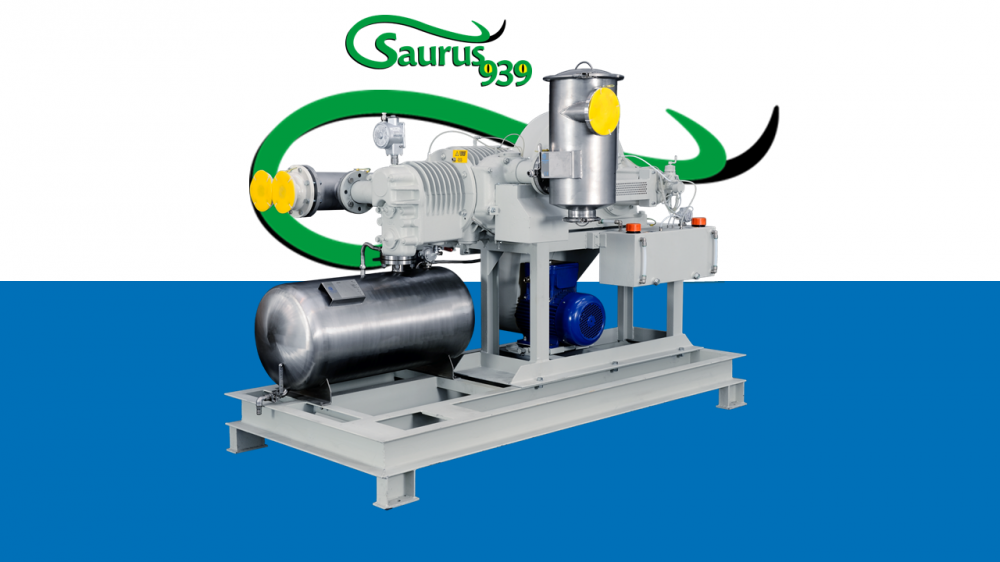
To address these operating conditions, a two-stage Saurus VVD MTBC vacuum pump was selected, specifically designed to ensure reliable performance even when handling fluids with a strong tendency to generate oily residues.
The pump operates at approximately 250 rpm, a significantly lower speed compared to conventional dry vacuum pumps. This feature allows for more controlled operation and helps minimize residue accumulation within the vacuum chamber.
In addition, the continuous flow of fresh oil helps keep internal surfaces clean by continuously carrying residues away before they can settle and build up.
Should deposits begin to form, the system allows short and frequent in-line washing cycles to be performed without interrupting production, quickly restoring optimal operating conditions and ensuring long-term reliability.
Key advantages of the Saurus939 vacuum pump
-
Effective control of oily residues
The combination of low rotational speed and continuous oil circulation significantly reduces the formation and accumulation of internal deposits. -
Improved process continuity
The system is designed to maintain stable operation even under demanding process conditions, minimizing the risk of production interruptions. -
Continuous cleaning of internal components
The constant flow of fresh oil helps prevent residue buildup on critical surfaces and moving parts. -
In-line washing without production shutdown
Cleaning cycles can be carried out during operation, eliminating the need to stop the process.
Additional strengths
-
Simplified maintenance
Faster and less invasive maintenance procedures help improve equipment availability. -
Specialized technical support
Dedicated assistance ensures optimal system performance and long-term reliability. -
Fast spare parts availability
Rapid access to replacement components helps minimize downtime when maintenance is required.
Would you like to learn how the Saurus939 can improve the reliability of your fatty acid processes and reduce issues related to residue buildup?
Contact our experts for a personalized technical consultation tailored to your process requirements.